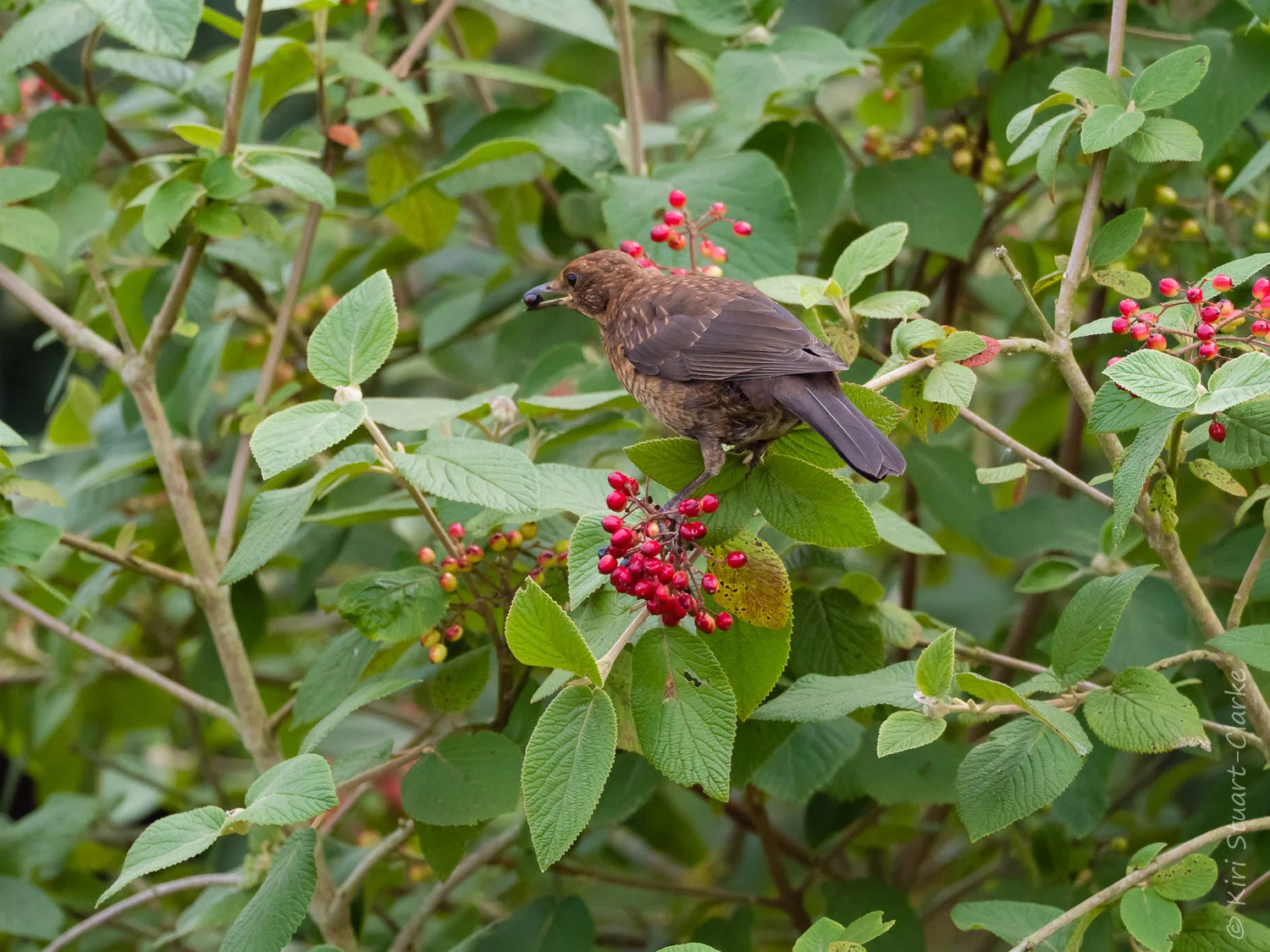
This year my shady corner native shrubs have really come of age and for the first time I’ve enjoyed watching a Blackbird family go nuts for them, some fledgelings have learned to jump from the ground while others land somewhat precariously on the berry-laden limbs.
A shady corner was one of the four key mini-habitat areas that I included in my original garden design (wildlife pond, wildflower meadow, hedgerow and shrubbery) and it mimics a woodland edge, which holds a high ecological value to wildlife. Chris Baines dedicates an entire chapter to it in his seminal “How to Make a Wildlife Garden“. A shrubbery provides shelter for a wide range of wildlife while using native shrubs maximises the insect species it can play host to, in turn providing caterpillars as a food resource for garden songbirds.
The shrubs I included in my “shady corner” were Spindle, Euonymous europaeus, Wayfaring-tree, Viburnum lantana, a member of the honeysuckle family and several Dogwoods, Cornus sanguinea. Sadly one hazel didn’t take well, but all the others are flourishing.
Only the ripe blackberries are being taken by the birds so I may get to watch their behaviour for a while. The crop seems a little early to me perhaps due to the hot dry spring after such a very wet winter, only time will tell.
One thing’s for sure, no two seasons are ever alike, and that, in a nutshell, is the joy of wildlife gardening!


