Part two of our article on Low Maintenance Lawn Alternatives. Read part one here
With our busy lives and long commutes, many people dread the idea of spending precious time mowing their lawns. Part one explores why its so important to avoid resorting to artifical turf and hard landscaping options. This second part offers a variety of colourful, attractive and pollinator-friendly design solutions for a lawn alternative that is low maintenance, beautiful and kind to nature.
How to Design A Low Mow Flowering Lawn

There are essentially two options, the first is to embrace the chaos and buy a ready made flowering lawn mixture, which will created a random mosic of colour, or alternatively you can handpick flower species for your very own look.
If going down the ready mix route, do double check that what you are buying is actually a native UK wildflower mix with suitable plants. There is a lot of deceptive marketing on cheap and cheerful retailer seed boxes designed to beguile you. Any plant is a wildflower native somewhere in the world! This will help provide our native butterflies and moths with host plants for their vital caterpillar stage so is very important. Ideally, its best to buy from a specialist uk wildflower supplier, this will also help ensure your seed has been stored correctly for best germination results and not allowed to dry out for months or years on retailers shelves.
The second option of selecting species means buying through a more specialist wildflower provider but allows you to build your own colour-themed mixture by choosing similar or contrasting coloured flowers for a true designer look. If you go down this route its worth also thinking about maximising flowering seasons to provide optimum support for our bees and other pollinators at the start and end of the season.
Depending on the exact mix of flower lawn species you sow, you may just need one or two mows on a high setting in spring, but from then on you can leave the sward completely alone through the main summer period, sit back and enjoy the flowers before mowing again once or twice in autumn.
Below is a list some of the best known low growing flower-lawn options to go for, sorted into colour schemes, but many other wild flowers will adapt to low growing and flowering height with an early mowing regime. You could even plant in some spring bulbs for extra colour.
Not all lawn alternatives will tolerate heavy footfall, so a little thought research and tailoring is required to find the right option and perfect blend for your area.
White or Pale Pink Flowers for Flowering Lawns

White clover (trifolium repens, native). Flowers: white, Jun-Oct – a star lawn alternative, tough and resilient and simply wonderful for garden bees. It is a caterpillar host plant for 14 moth species, in particular burnet, heath, mother shipton and silver y moths. It has a prolonged flowering season and the leaves of this legume stay green during the height of summer unlike most lawns. Note that its cousin red clover grows much taller than the white.

Yarrow (achillea millefolium, flowers: white to pink, Jun-Oct) a pretty feathery leaved plant in the daisy family with erect flower spikes that flower low with mowing. Great for butterflies and plume moths. Versatile, does well on clay and extremely drought resistant.
Blue or Purple Flowers for Flowering Lawns
Selfheal (prunella vulgaris, native). Flowers: blue/purple Jun-Oct – a good companion to clower, this semi-evergreen herb with beautiful violet flower spikes can flower well into October. As its name suggest, the herb has a long history of medicinal use for healing wounds.

Bugle (ajuga reptans, native). Flowers: purple Apr-Jun – a member of the mint/dead nettle family with purple flowers on little stalks in spring

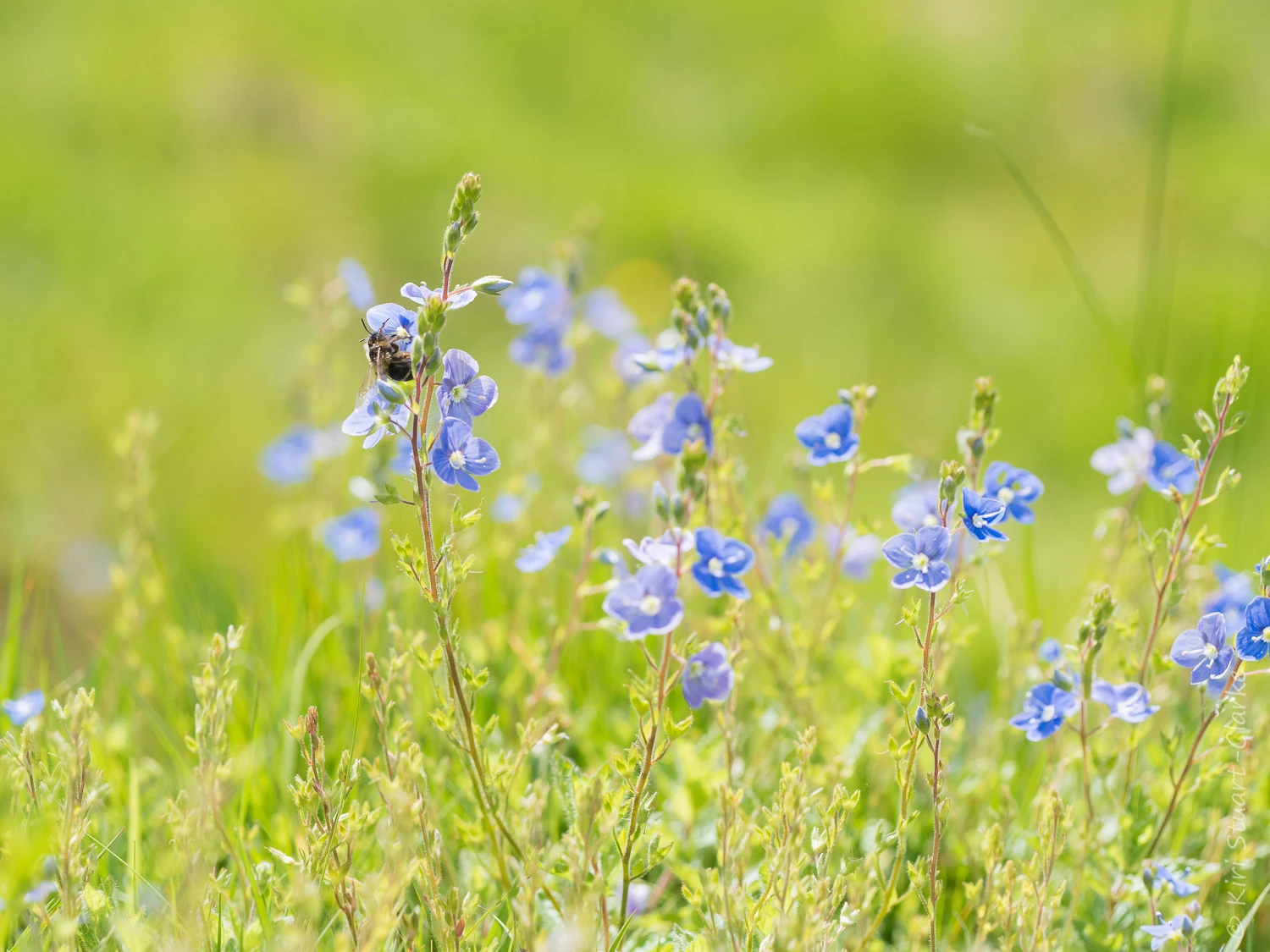
Germander Speedwell (veronica chamaedrys, native). Flowers: blue Apr-Jun – A host plant for the heath fritillary butterfly, this variety of speedwell displays bright blue flowers in spring and its name references its historic status as a good luck charm for travellers, to speed them well on their way. Other creeping speedwell varieties include Common Field Speedwell (v. persica) , Grey Field Speedwell (v. polita) Green Field Speedwell (v . agrestis)

Ground Ivy (glechoma hederacea, native). Flowers: lilac, Mar-Jun – nothing to do with its larger relative, it looks a little like bugle and is low growing spring flower oft seen with primroses.

Sweet Violet (viola odorata, native). Flowers: lilac to deep purple, Mar-May low growing spring flowers. Sweet violet spreads via rhizomes. Its relative common dog violet flowers a little later.
Yellow / Orange / Red Flowers for Flowering Lawns


Bird’s foot trefoil (lotus corniculatus, native). Flowers: yellow to orange, May-Sep) – Not everyone’s cup of tea with its vivid yellow “bacon and egss” but this is an excellent moth and butterfly caterpillar host plants used by Common Blue, Green Hairstreak, Dingy Skippers and Clouded Yellow butterflies.

Creeping Buttercup (ranunulus repens, native). Flowers: yellow, May-July – one of Britains native buttercups. Leaves are comparatively large and it does have quite a vigorous creeping habit so be sure you want plenty of glossy yellow flowers before including it in a mix.

Daisy (bellis perennis, native). Flowers: white-yellow, Apr-Oct – Every perfect flower lawn should have some. No British summer is complete without at least one daisy chain and a game of “she loves me, she loves me not”.

Scarlet Pimpernel (anagallis arvensis, native). Flowers: red, May-Oct – Made famous by the French rebel, this is a delicate tiny little red flower that opens in the morning when the sun shines and will close up in less clement weather.

Dandelion (taraxacum officinale, native). Flowers: yellow Apr-Oct – a marmite plant hated by many traditional gardeners precisely for its habit of invading lawns, but a whole field full is really a sight to behold.

Cat’s Ear (hypochaeris radicata, native). Flowers: yellow May-Oct – often confused with dandelions as it alsow grows as a rosette, but its more delicate and low growing with flowers on spikes and is very popular with meadow butterflies like skippers and meadow browns and gatekeepers.
Fragrant or Herbal Flowers for Flowering Lawns
Creeping Thyme (thymus serpyllum, naturalised). Flowers:May-Aug – a fragrant creeping herb that originated in the mediterranean and was brought to Britain by the Romans.
Chamomile (Chamaemelum nobile, native). Flowers: Jun-Aug – another aromatic plant used for tea, this herb became the height of fashion in the Elizabethan era and it was the Elizabethans who first came up with the idea of planting it en masse as a feathery soft lawn fragrant underfoot. A non flowering cultivar is also available.
Corsican Mint (Mentha requienii, naturalised). Flowers: purple Jul, Aug – Introduced from Corsica, Sardinia a low growing mint family plant.
Green / Non Flowering Low Growing Lawns For Shade
Moss (bryophyta)- overlooked and underrated, particularly good for shady areas, it is a gorgeous rich green and bouncy underfoot.
Consider A Traditional Wildflower Meadow
If you don’t need a low level lawn-like effect and the height of plants is no issue you could even consider a wildflower meadow patch. For the extra effort of an annual hay cut you could grow a traditional natural grass and wildflower meadow with endless choice of taller flowers. A summer wildflower meadow mix has a cutting regime timed as a hay cut in late summer. Or if you love to see birds in your garden you could consider a dense flower meadow mix for birds and bees. These are designed to be left overwinter for seeds and require a late winter cut around February after the birds have foraged the seedheads.
Kiri’s Design Tips
Probably the star performer for an alternative to turf lawn is white clover, perhaps with a sprinkling of purple-blue selfheal and speedwell dropped in, but there are a whole host of options including the lovely idea of fragrant and herbal flower lawns grown with chamomile, thyme or mint, an innovation first dreamed up by the Elizabethans.
Abandon both your artificial turf and the lawn mower!
Hopefully this article offers inspiration and practical options that mean your mower will be left to gather dust in the garage most of the year, leaving you free to enjoy the natural beauty of your vibrant, low flowering lawn alternative and the wildlife species it brings into your garden.
But whatever you do – throw that block paving brochure into the recycling and start growing an exciting low maintenance beautiful space for wildlife!