Musings on citizen science, the impact of extreme weather events on butterflies and the insect apocalypse.

Here in Norfolk, the Big Butterfly Count of 2022 seemed to start with a bang but fade with a whimper, as the saying goes.
The Big Butterfly Count, for those who’ve not heard of it, is a national citizen science project aimed at assessing the health of our environment by monitoring butterflies, an insect which often acts as an ecological early warning system due to their complex lifecycle. The annual project runs from the second half of July into the first week of August and is timed to cover the flying period of the greatest number of species. Since it’s launch in 2010, it’s become the world’s biggest survey of butterflies according to scheme organisers, the Butterfly Conservation Society.
This season, however, the butterfly recording event was quickly overshadowed by an intense heatwave caused by a so-called “Spanish plume” – a stream of hot air arriving from Spain and North Africa. So instead of counting butterflies, the very first weekend instead saw me hiding inside the house with shutters drawn, as temperatures hit historic records, peaking at 40.3° in Coningsby, Lincolnshire on the 19th July.
At home in mid Norfolk we missed the big 40° by the merest smidge, recording an eye-watering 39.7° and breaking our garden’s previous ten year temperature record by almost 3 degrees from the 36.8° set in July 2018.
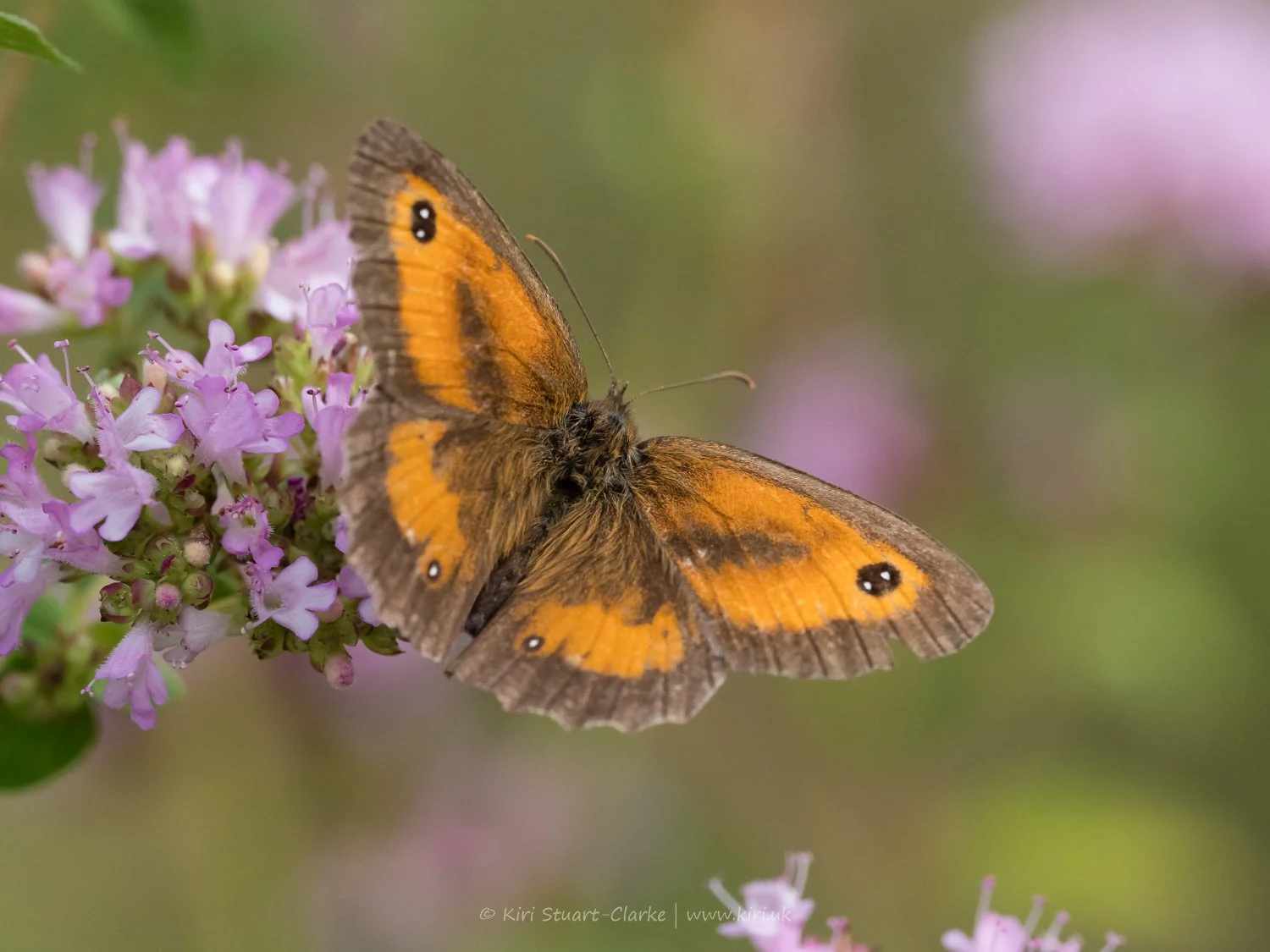
Once counting recommenced back in my garden the compact, cheery, orange Gatekeeper, Pyronia tithonus, butterfly and charismatic black and the black and red Six-Spot Burnet, Zygaena filipendulae, a day-flying moth proved the undisputed stars of the show, but my heart sank.

Over the course of the three weeks it became impossible to deny that the showing was dismal in comparison with previous years, both in species diversity and especially abundance. Several prior attendees such as the Small Copper, Speckled Wood and Silver Y moth were complete no-shows this year, whilst others like the Common Blue, Ringlet and Painted Lady made only the most fleeting of appearances.
It was hard to feel surprised. As I sat outside gazing at a parched dusty landscape, my pond formed a small oasis of green amidst the barren, dried-out straw-coloured remnants of what would normally still be a thriving wildflower meadow. Climate change definitely seemed to be making its presence felt.
Possibly even more worrying than the record high temperatures was the sheer duration and severity of the drought. Even established, normally drought tolerant shrubs and trees were showing signs of stress, wilting, shedding leaves and in some cases with whole branches dying off in our boundary hedgerow.

We’ve not been recording rainfall very long but for the year to date (end July), our cumulative precipitation reached just 250ml vs 444ml in 2021, tracking some 44% under last years level, and that hadn’t exactly been a wet year to start with.
This is all very concerning from a butterfly’s perspective. Firstly, flowers can’t actually produce nectar with water, making it harder for butterflies to feed, survive, mate and lay eggs. But even worse, with wildflowers going early and grasses that serve as host plants dying en masse, there will be nothing for the caterpillars to eat when they hatch and the next generation will starve. Some butterflies do have adaptive survival tactics, for example going into hibernation early, but others are specialised and more vulnerable.
Climate change itself is already difficult enough, as to survive butterflies need to alter their range whilst facing the triple challenges of habitat loss and a fragmented landscape, agricultural pesticides and urbanisation. Some may not be able to migrate further north, or even if they can, their host plants may not be there, or be able to adapt to changing conditions quickly enough to support them. With numbers already depleted or in decline for many species, it becomes harder each year to find a mate and reproduce. Against this backdrop, extreme weather events such as we’ve witnessed this year have an intensified negative impact.

Its exactly these challenges and the resulting decline in insect population thath more broadly have led to the term “insect apocalypse” recently being coined to articulate the sheer extent of population and diversity changes being seen in western Europe.
All of this really doesn’t augur well for my local Norfolk butterfly population next year. Although perhaps, as is often the case, it may be a case of winners and losers, with timing of broods playing an important role. Hopefully things are not as bleak nationally as they are in my little patch of mid Norfolk. It will be very interesting to see what insights the Big Butterfly Count will bring on the impact of such extreme weather events over the next few years.
One small ray of hope in my garden this year was the reappearance of Small Tortoiseshell and also Red Admiral butterflies, which have struggled of late largely due to a series of developments in my village causing habitat loss. That was all thanks to a small patch of nettles that popped up in the perfect spot – a sheltered sunny corner – and that I had made sure were left alone. This small victory served as a timely reminder of how even small changes to make a garden more wildlife friendly can make a big difference.
How You Can Help Butterflies and Wildlife
The good news is that there is a great deal you can do in your garden to help butterflies – find out more in my Gardening for Butterflies article.
Resources
The Big Butterfly Count website
Freshwater Habitats – website with excellent resources on building a wildlife pond
An Anthropocene Magazine article covering the latest insight into Europe’s “Insect Apocalypse”
An Emergence magazine article on the impact of climate change on butterflies in the Orkneys
R. Lewington – Pocket Guide to the Butterflies of Great Britain and Ireland
A. M. Riley – British and Irish Butterflies
