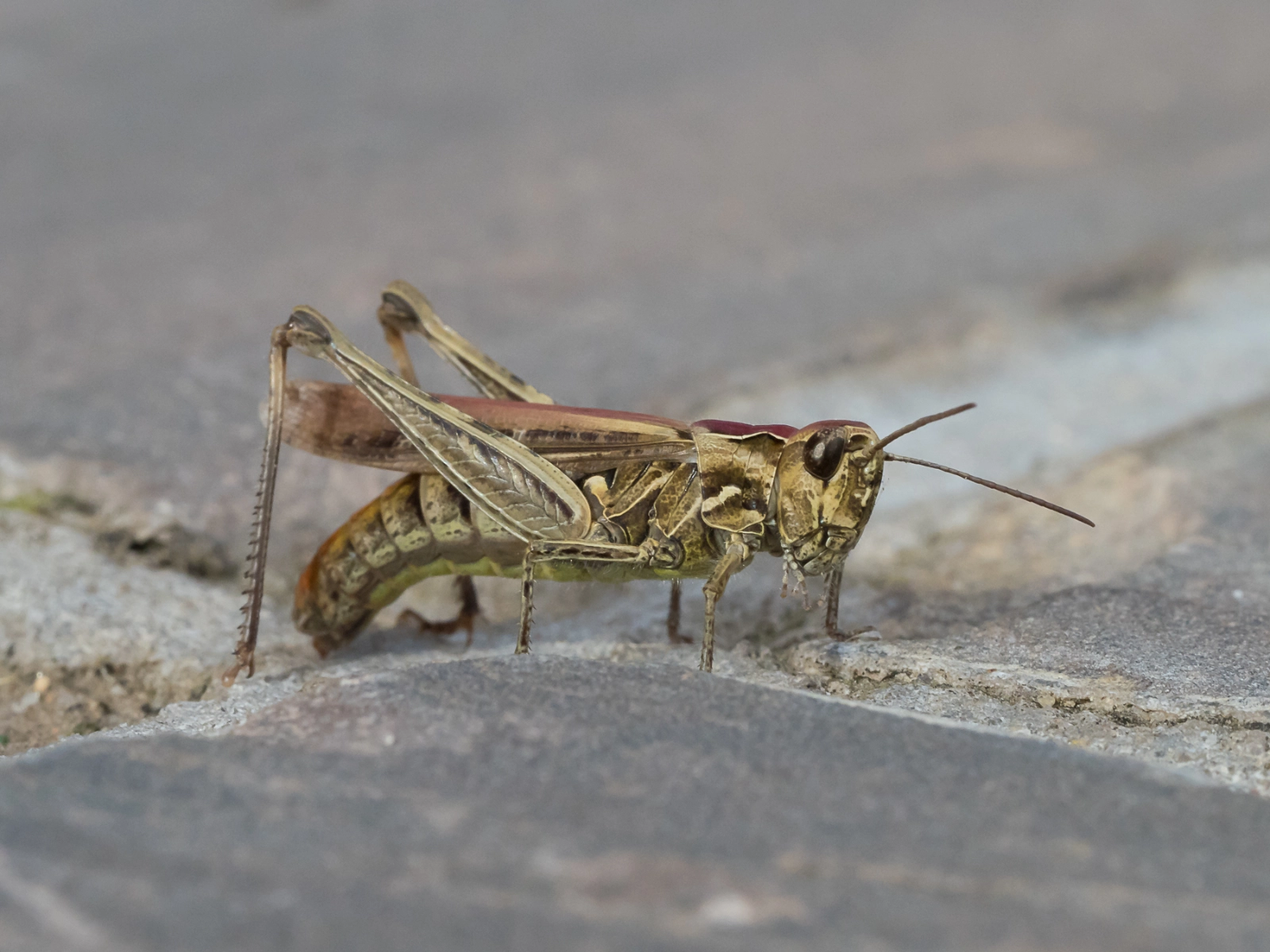
The collective noun for Grasshoppers is officially a “cloud” used for locusts, a “swarm” used for bees or wasps, or unkindly, a biblical “plague”. Adopting the collective term “rasping” instead feels so much more apt if the wonderful sounds in my garden are anything to go by.
The good growing weather and unusually lush vegetation seems to have favoured them this year and numbers have rocketed. I was wondering why they kept wandering onto the patio where they were exposed and vulnerable to predators. Then I saw this female bravely ovipositing in the mossy grouting hollows even though she knew I was watching her from on high.
Mystery solved.
About Common Field Grasshoppers
There are 11 species of Grasshopper living in the UK. Common Field Grasshoppers have short stubby antennae and rely on a herbivorus diet. They are highly variable in colouration and lack the long ovipositor that crickets possess.
They are hemimetabolous, meaning that they have a three stage lifecycle of egg – nymph – adult and larvae go through five instars or moults without a complete metamorphosis.
Common Field Grasshoppers hear through a tympanum situated on its abdomen, near the base of its hind leg. They make their rasping sound or stridulate by rubbing a specialised microscopic row of pegs on the inside of their legs against a thickened vein on their wings. Malls call during the daytime in response to each other.

My reference photos for my Field Grasshopper illustration:


I learned so much by creating this nature journalling entry, and will be definitely using “a rasping” as my collective noun for Grasshoppers from now on in the hope it takes off!